

RBC Brooklyn Half 2026: A New PR at Coney Island
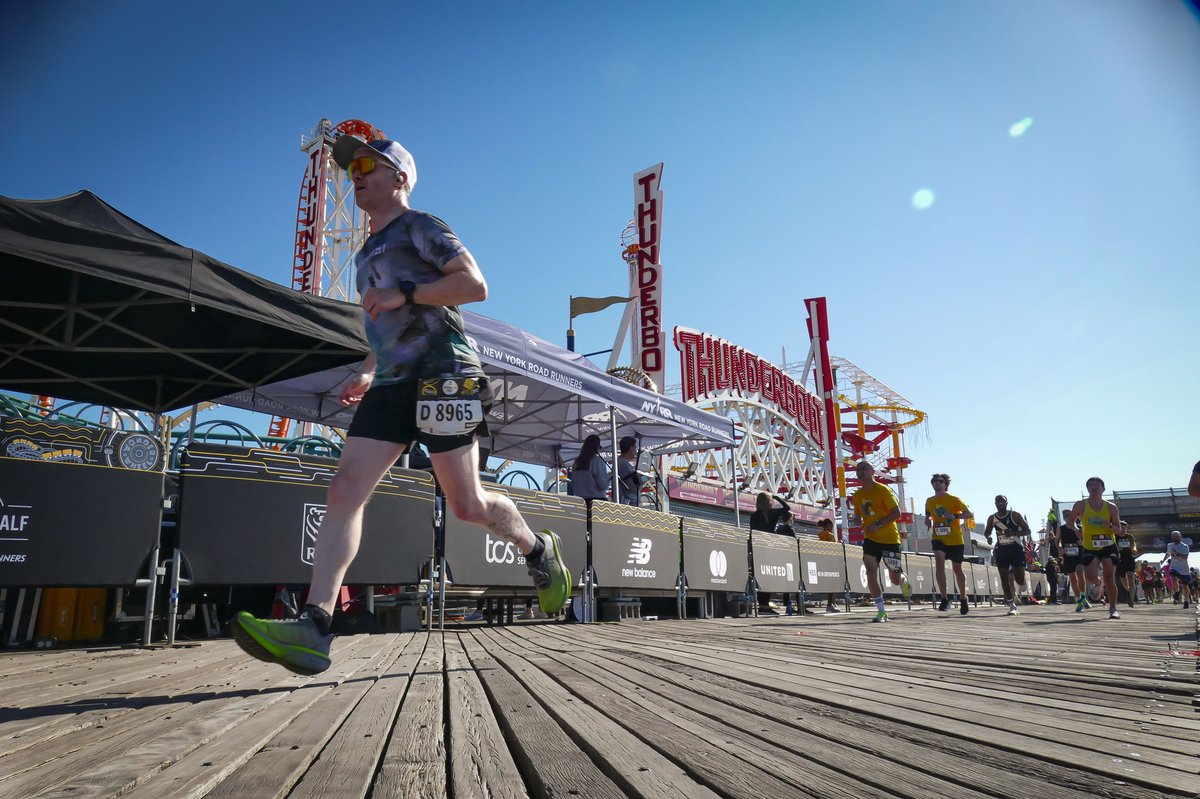
The RBC Brooklyn Half is the largest half marathon in the United States, and in its 44th edition this year it drew more than 30,000 finishers from Eastern Parkway to the Coney Island boardwalk.
It's a point-to-point course with a front-loaded elevation profile: all the climbing happens in Prospect Park, and then you pay it back on a long, flat, exposed run down Ocean Parkway to the sea. I've run it four times now. This year I came in with no specific training block behind me, a vague goal of matching a PR set over two years ago, and weather that actually cooperated for once. I beat that old PR by over three minutes.
Overview
The race starts on Eastern Parkway next to the Brooklyn Museum and finishes on the wooden-slat boardwalk near West 10th Street in Coney Island. The official distance is 13.1 miles with 246 feet of gain and a net elevation drop of about 110 feet. The climb is almost entirely concentrated in Prospect Park, where Battle Pass Hill crests at 153 feet with a 3.5% grade before a 97-foot plunge out of the park around mile 7. After that, the course is essentially flat all the way to the ocean.
NYRR runs staggered wave starts from 7:00 AM through 8:30 AM, and there's a four-hour overall cutoff. Parking is available at Maimonides Park near the finish. There's no car access to the start on Eastern Parkway, so most people take the subway, an official NYRR shuttle, or jog over from wherever they managed to stay.
Conditions & weather
The course is entirely paved: asphalt for the first twelve-plus miles, wooden boardwalk for the finish. No technical sections, no trail, no surprises underfoot except for the mild camber on Ocean Parkway and the gap-year texture of the boardwalk planks at the end.
NYRR issued heat warnings ahead of the race, but for Wave 1 runners it was a mild, clear morning with no humidity worth mentioning. The early start is what made those warnings feel overhyped. The sun is low and the trees in Prospect Park provide genuine shade through the first half. By mid-morning, for the later waves, it would have been a different story. The exposed final stretch on Ocean Parkway and the boardwalk has no shade at all, and on a warmer day that section collects casualties.
Getting to the start
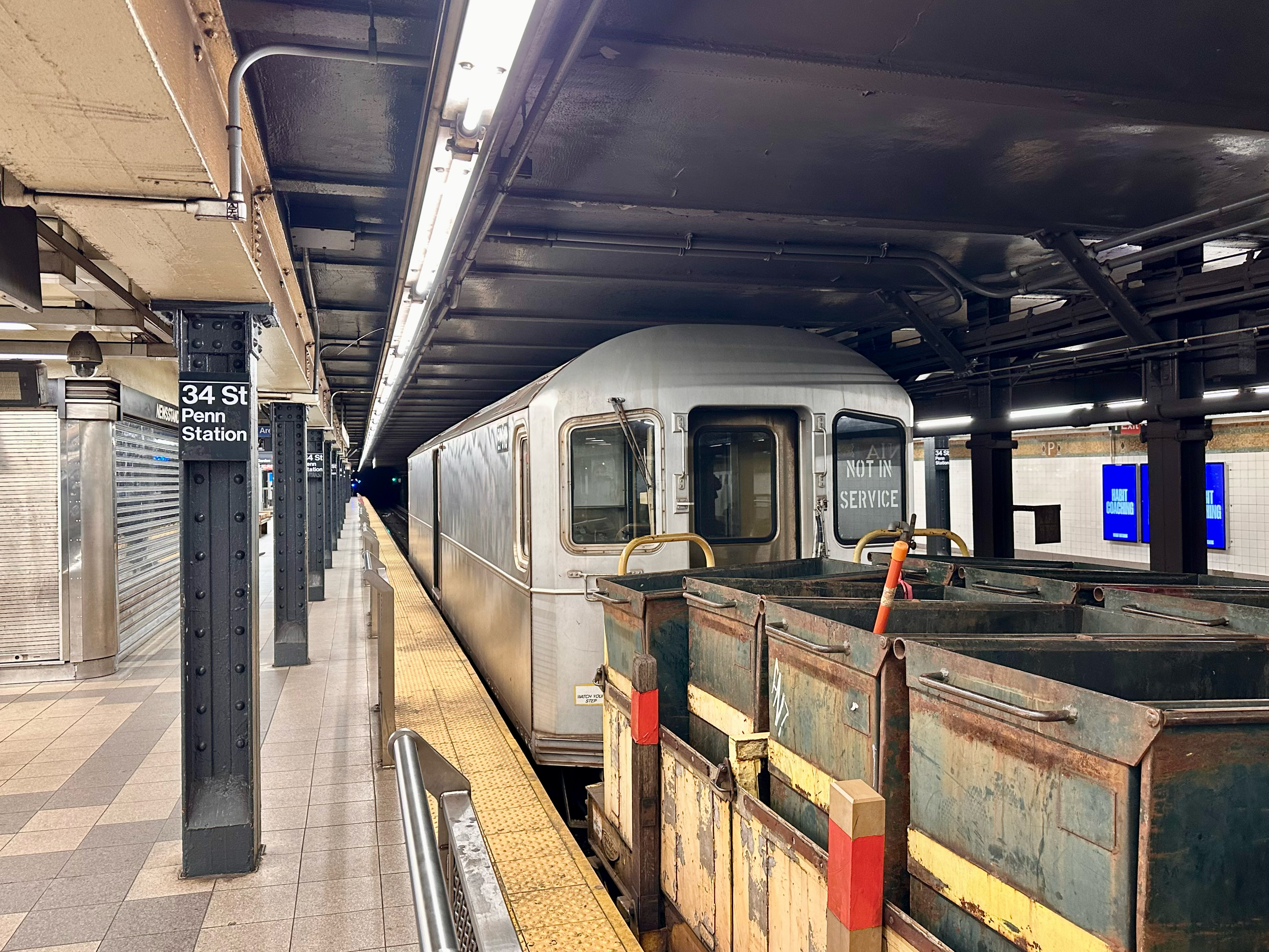
My alarm went off at 3:45 AM, which is a genuinely absurd time to wake up for a race in the city where I live. I jogged to the subway and descended into the early-morning chaos that is New York transit before a major event.
Thirty thousand people were funneling toward Brooklyn, and the city made approximately zero accommodations for them: limited early service, dirty cars, the usual cast of characters. Every time I do this, I think about how many of these runners flew in from somewhere and are getting their first real impression of New York City at 4:30 in the morning underground. It is not the city's finest hour.
Miles 0–3: Eastern Parkway to the Park
I was in Corral D, and this year the wave releases felt compressed — the corrals stacked up behind each other so quickly that I hit the start line in a thick crowd and barely had room to settle into a rhythm. I tapped my watch and went.
The first stretch is a small downhill shaded by trees, and it's easy to feel good here. I was well below my 8-minute-mile target immediately, which was the plan.
I'd been thinking about something I'd heard in a few podcast interviews with old-school pro runners who talked about racing before GPS watches handed you a real-time data feed at every step. The recurring theme was going out hard and then holding on, trusting the body to find its level rather than leashing yourself to a zone. All of my best times at distances up to 50k have come when I went out uncomfortable-but-controlled for the first couple of miles and then let things settle. So that was the approach: no mile-by-mile pace plan, just go out at PR effort and see what the body does.
The sun comes out on the slight uphill toward Grand Army Plaza, and the streets narrow. I jockeyed through the crowd to keep the pace up. Around the monument, back down Eastern the way I'd come, then the turn along the outside of the park before heading in. Three miles in and I was averaging below 8-minute miles across all three.
Miles 4–7: Prospect Park
Prospect is where the race happens, at least in terms of elevation. You more or less complete a full loop of the park before exiting onto Ocean Parkway around mile 7. The first significant climb is Battle Pass Hill, the biggest in the park — not steep, but sustained. I backed off slightly at the base to keep the effort consistent rather than the pace, which is the right call there. I've climbed it enough times to know how it plays. The hill does what it does and then it's done, and you get a welcome decline as you loop around the north side near Grand Army Plaza.
Then the smaller rolling hills on the far side of the park. This is where I had the first genuine moment of doubt. Up until Battle Hill I had held sub-8 pace. Now, with the rollers stacking up and several miles still ahead, I wasn't sure I could sustain the effort all the way to Coney Island. I set my eyes on a near-term target — the park exit, less than a mile away — and kept moving. It's a technique I've learned over a lot of races: when the whole distance feels too large, shrink the problem.
Miles 8–13: Ocean Parkway to the Boardwalk
After the park you cross a highway ramp to get onto Ocean Parkway and then it is simply straight and flat for the next five-plus miles. No turns worth noting, no terrain to manage. It is a mental exercise.
My strategy here, developed over several times running this race, is to zone out completely. I do not look at the street signs. The avenues count down alphabetically from Church to the beach and if you start paying attention to them, the distance becomes unbearable. I kept my head up and ran.
I was maintaining goal pace and had started to think the PR was genuinely in reach, but I wasn't going to start celebrating at mile 9. I had two or three more mental dips over this stretch. Each time I picked a near-term landmark and focused on reaching it. For the last four miles, the splits were actually trending faster — a 7:50, a 7:49, a 7:35, and a final mile that came in at 7:10 as I pushed toward the boardwalk.
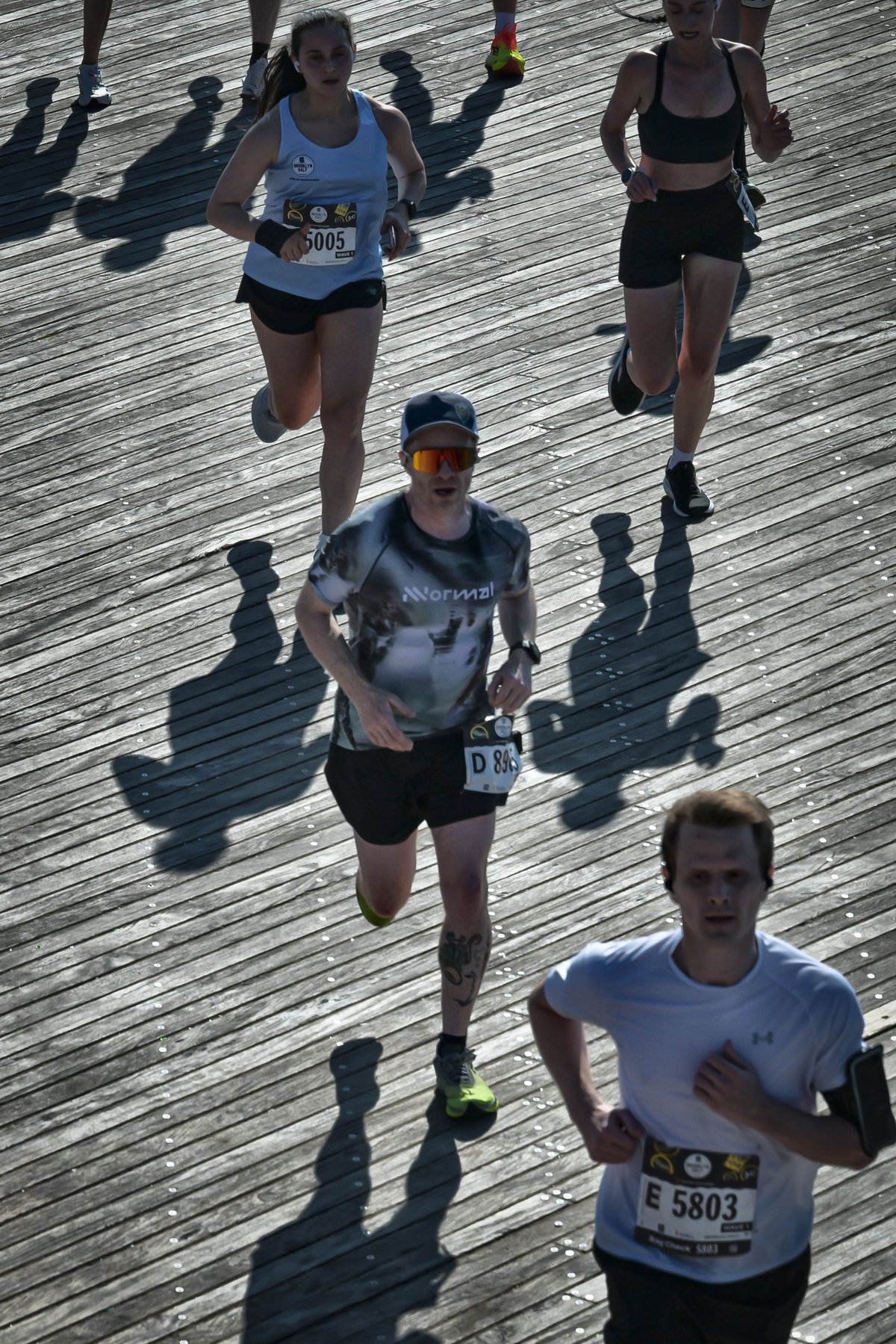
When the right turn toward Coney Island appeared, I knew it was done. The boardwalk opened up under the blue sky with the Thunderbolt coaster looming in the background, and I had enough left to push through the finish.
After the finish
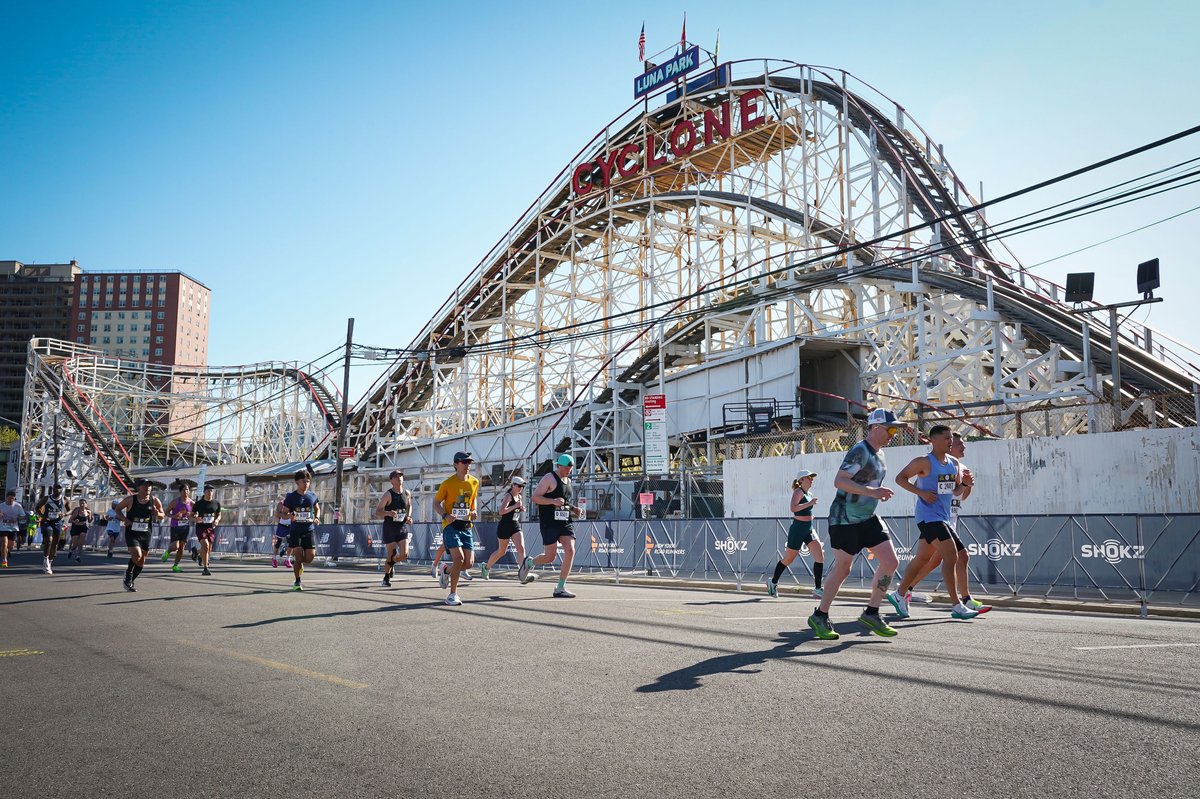
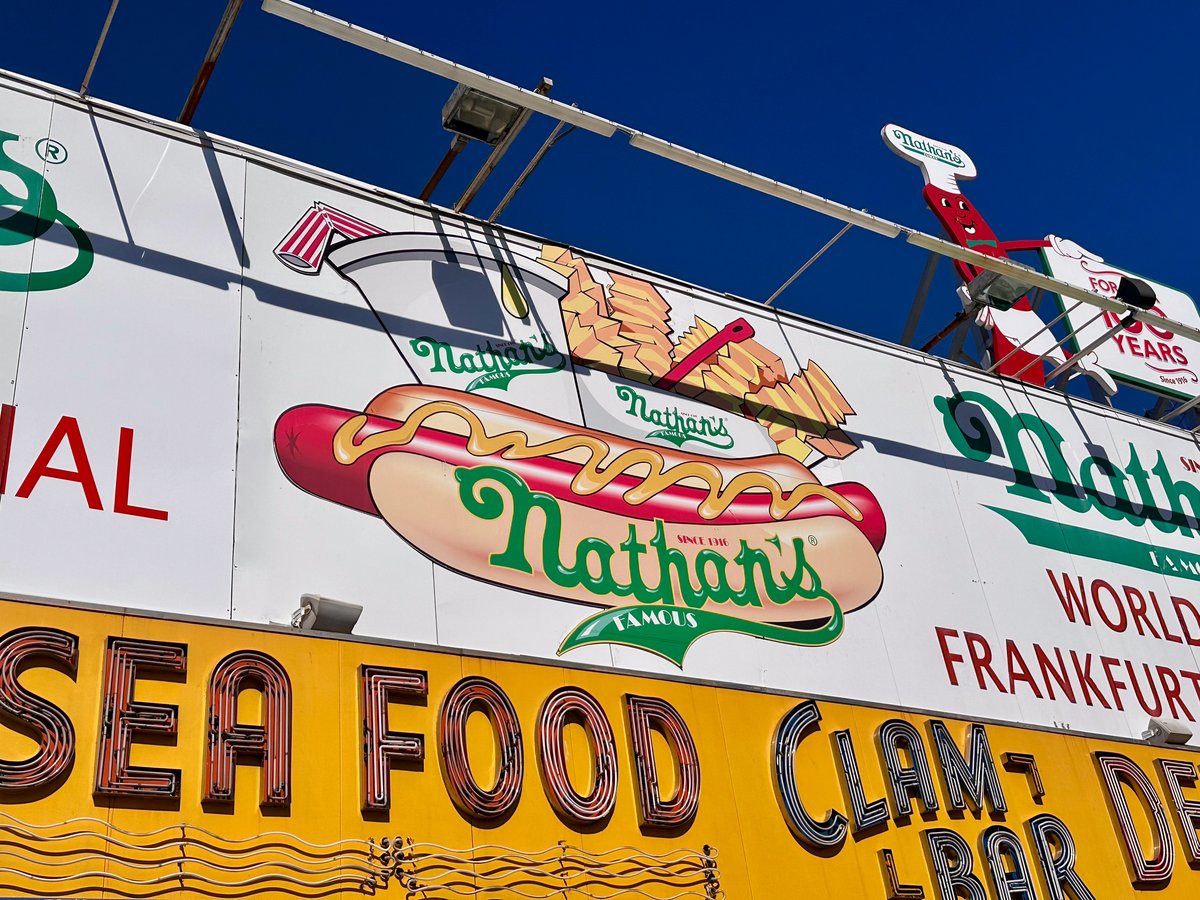
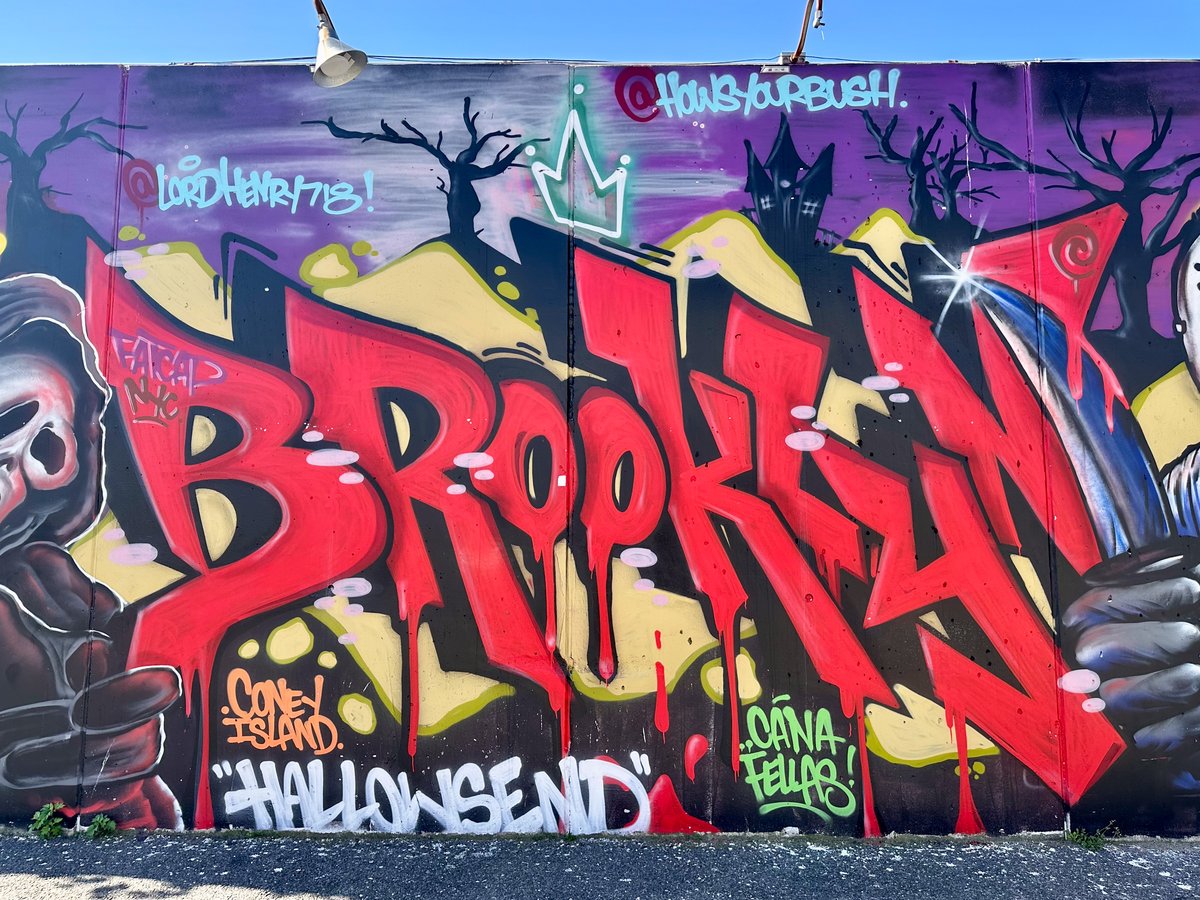
The post-race festival at the stadium is ok but wandering around Post-race Coney Island in the morning is more fun. The Nathan's sign blazes against a deep blue sky, even though the lines are way too long on race day. The graffiti murals along the fences read BROOKLYN in block letters that feel appropriately outsized for the occasion. It's a good place to finish a race.
Overall
The Brooklyn Half is a well-run race. NYRR executes the logistics at this scale about as well as anyone could — the fluid stations are frequent (ten of them, spaced roughly every mile to two miles), the Expo is organized, the finish area works. The crowd support was lighter than I remember in previous years, at least in the earlier miles when I was moving through, but it picks up through Prospect Park and the finish area delivers.
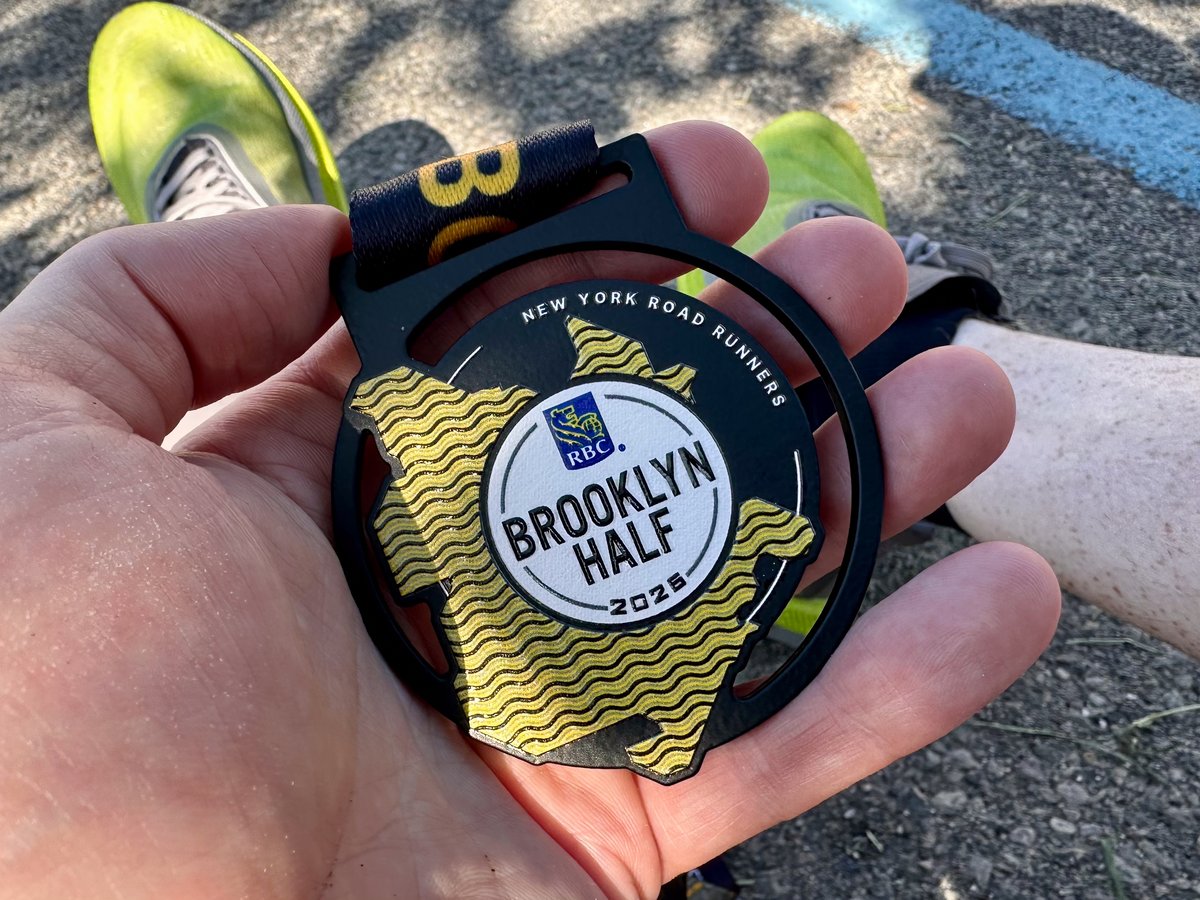
On the day, the approach worked. 1:43:14, a new PR by over three minutes, with the second half of the race faster than the first. Going out at effort rather than slavishly managing pace was the right call for this course and apparently for where my fitness is right now.
Whether I'm back next year is genuinely uncertain. The NYRR registration process has become a real frustration — demand has outpaced the system, and getting into their races now requires either lottery luck, a qualifying time, or the virtual-race workaround. That friction is real, and there are other spring half marathons in New York that don't require jumping through the same hoops. But the Brooklyn Half is the Brooklyn Half. Hard to fully walk away from a course where you just ran your best half marathon.
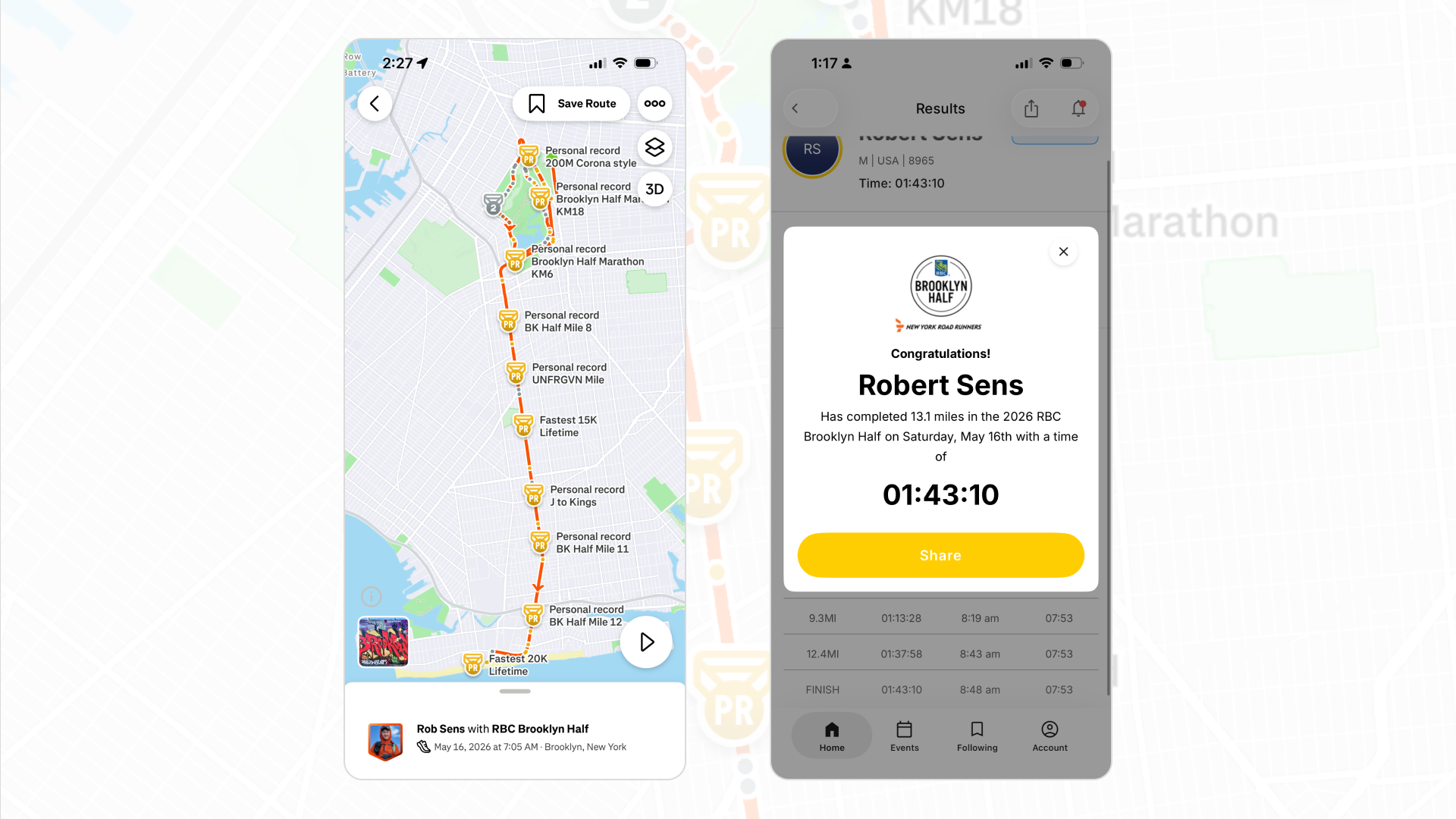
By the Numbers
- Distance: 13.26 mi
- Elevation gain: 256 ft
- Elapsed time: 1:43:16
- Avg pace: 7:47 /mi
- Avg HR: 167 bpm (max: 185 bpm)
Gear Highlights
- Craft Endurance 2 — Fourth pair of these and still the go-to road shoe - responsive underfoot with a road feel that holds up over 13 miles of pavement.
- Raide TrailTech Shorts — Best running shorts going right now, full stop.
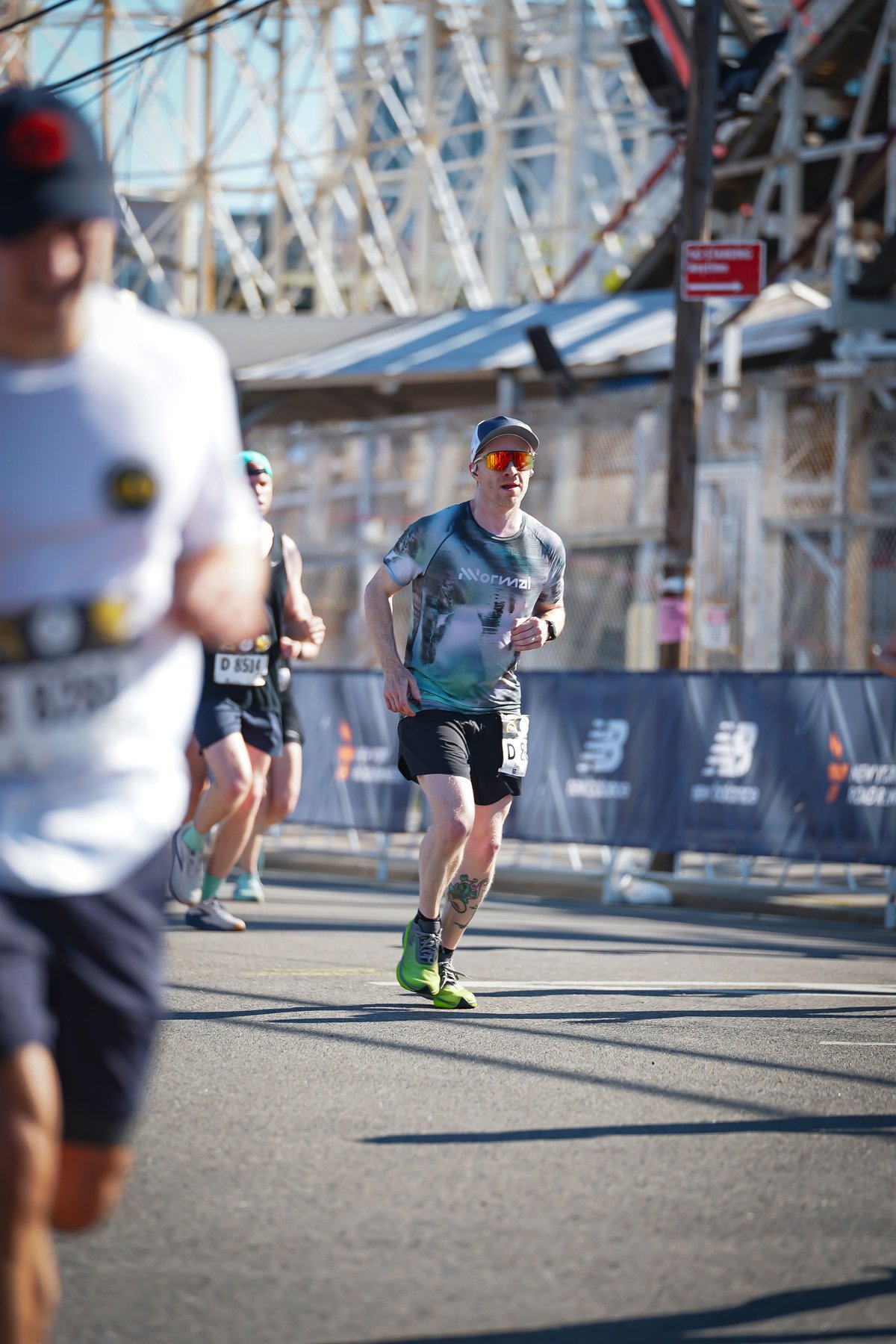
- Nnormal Race Shirt — Featherweight and the sun-deflecting print earns its keep on a clear, exposed course like this one.
- Julbo Intensity Sunglasses — The REACTIV lenses handled the bright morning sun without issue, and you barely notice them on your face.
Tips
- Bring your own nutrition. The course has ten fluid stations stocked with water and Gatorade Endurance, plus Maurten gels at mile 6.8 - but you need to be on the right side of the road to grab one without losing time. Don't count on it.
- The easiest guaranteed entry at this point is completing the NYRR Virtual 6 the year before. It's essentially pay-to-play, but it removes the lottery uncertainty entirely.
- The final stretch along Ocean Parkway and the boardwalk is fully exposed with no shade. Manage your effort going into it - this section has ended a lot of people's races on warm days.
- The street signs on Ocean Parkway count down alphabetically from Church Avenue to the beach. Don't start reading them. Zone out and run.
- Wave 1 runners get the best of the conditions on this course - shade in Prospect Park and a cool start. If you have a time qualifier, use it to get into an early wave.
More Info & Links
- Official race page — NYRR: Registration, event guide, and course information for the RBC Brooklyn Half Marathon.
- NYRR Results: Full results database for all NYRR events including the Brooklyn Half.