

Big Bear Squatch North — West Mountain on a Warm April Morning
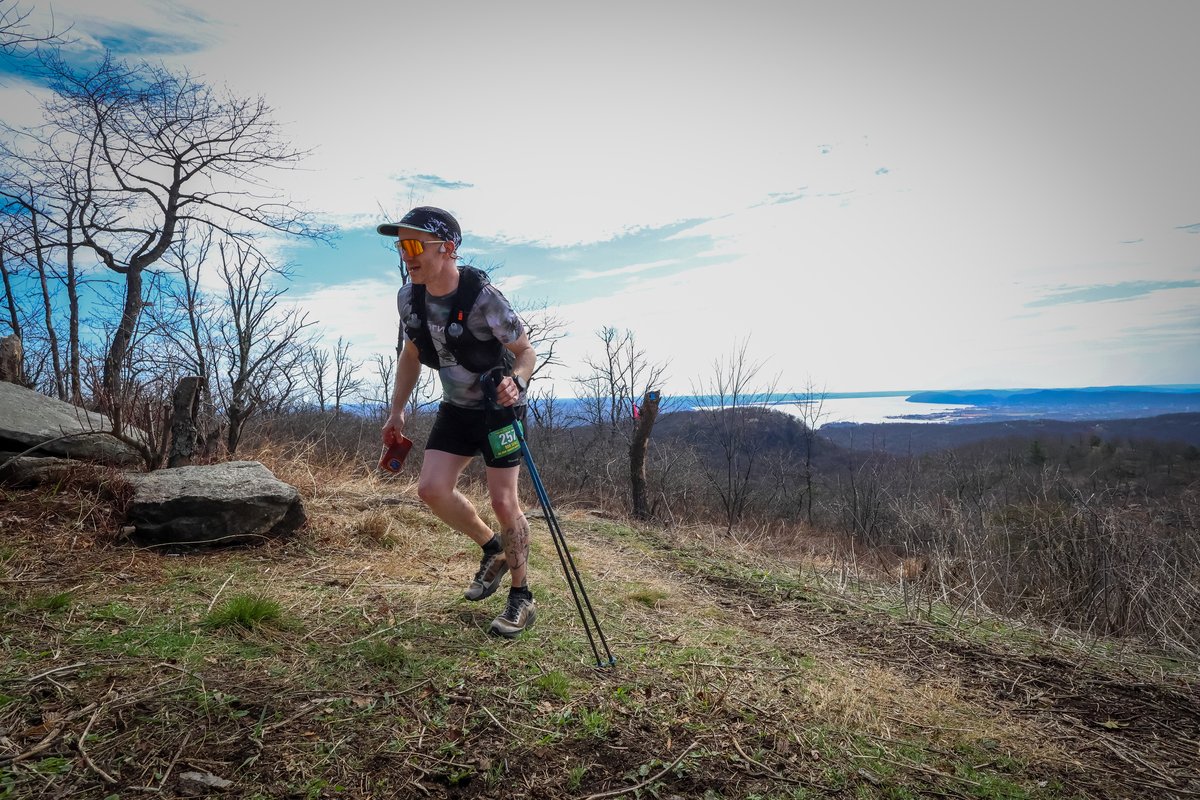
The Big Bear Squatch North is a half marathon put on by Sassquad Trail Running in Harriman State Park, out of the Anthony Wayne Recreation Area at Bear Mountain. Thirteen-and-a-half miles, 2,600 feet of gain, a double-lollipop course that sends you up West Mountain. The terrain is a bit messy and technical, but mostly runnable. The climbs are short but punchy enough to earn a solid training day. This was my third time running it. I had to check to confirm that, which is either a comment on my memory or on how naturally this race fits into an April calendar. This year, I went out a little too hard after running a marathon in Kentucky the previous weekend. I paid for it in the back half, which made the second loop feel longer than it was. Still a good day out.
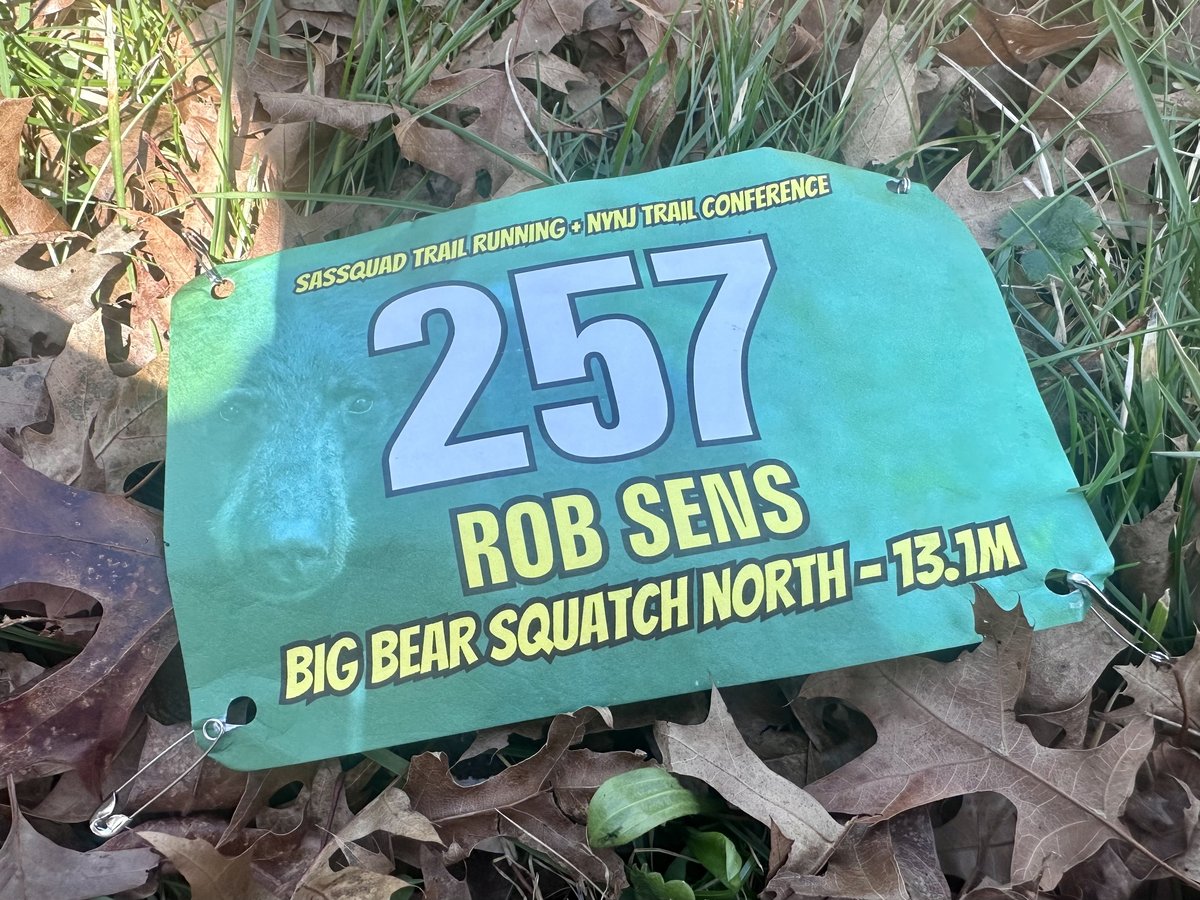
Overview
The Big Bear Squatch North is now in its fifth year, organized by Sassquad Trail Running in partnership with the New York-New Jersey Trail Conference. The race starts and finishes at the Anthony Wayne Recreation Area off the Palisades Interstate Parkway, about 40 minutes from the city on a clear Saturday morning with no traffic. The half marathon covers 13.1 miles on a double-lollipop course that is 95% unpaved trail. Elevation gain is 2,600-plus feet, with the high point at the West Mountain Shelter on the Appalachian Trail, around mile 11.
The course also offers a 10K run/hike and ruck options, and the field is capped at 400 across all events. The half has a six-hour cutoff with an intermediate cutoff at the start/finish around mile 7.5. This race is the opening leg of Sassquad's Mountain Madness Series. It sells out by March most years.
Harriman is familiar terrain. The rock, the ridge lines, the mix of rooty singletrack and wider jeep roads, it's terrain that rewards anyone who runs here regularly and can punish those who aren't used to the trails.
Trail conditions & weather
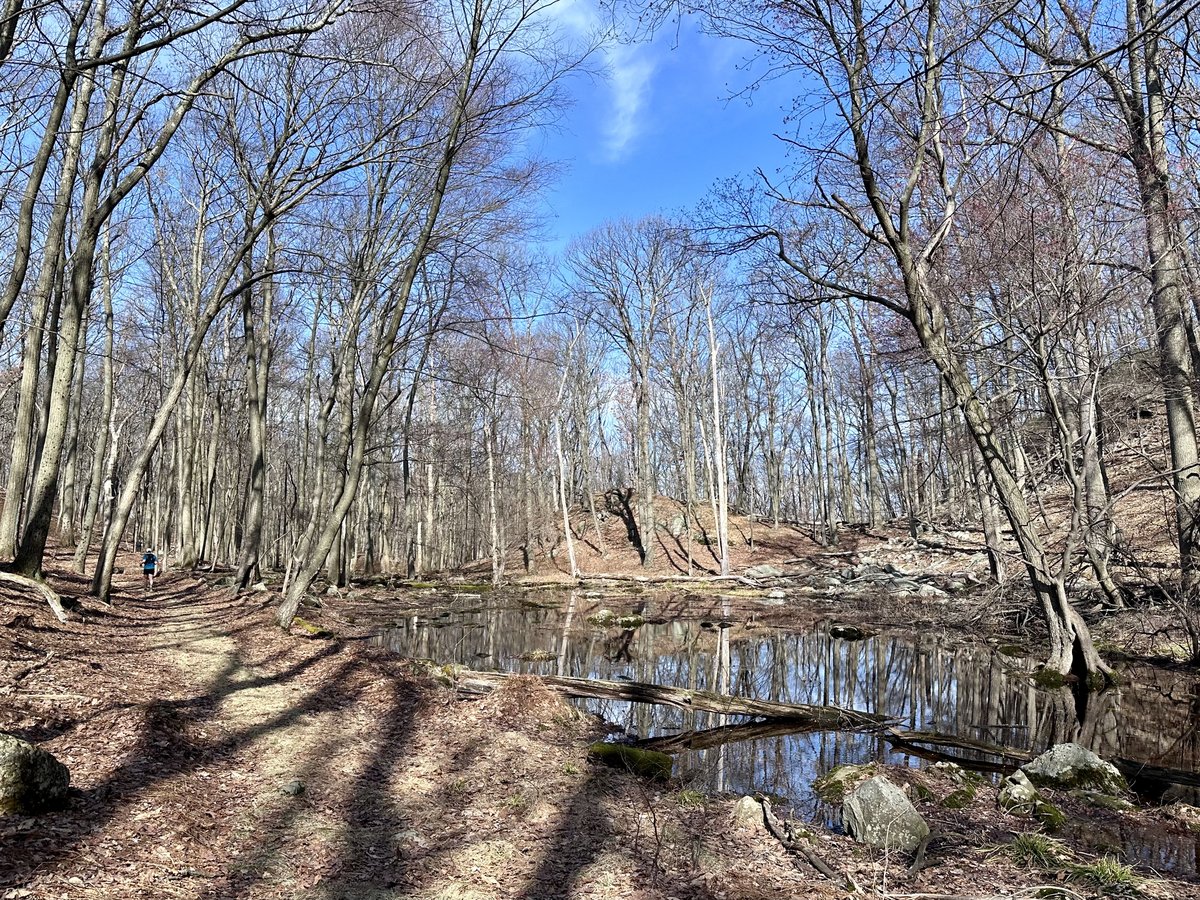
The course mixes technical singletrack with stretches of gentler trail and a few sections of wider carriage road. Underfoot you get roots, rocks, granite shelves, and two genuine scramble zones - Cat's Elbow being the main event. The surface dries out reasonably well in April but there are often wet patches along the way.
Race morning was clear and warm for early April, starting in the low 60s and climbing toward the low 80s by the afternoon. In past years this race has started cold enough that you're glad for an extra layer. This time the warmth was welcome at the gun but noticeable on the climbs. Dry conditions throughout.
The opening loop
The 2026 edition ran both the half marathon and the 10K as a mass start at 9 AM. I've run enough Sassquad races to know how quickly the singletrack bottlenecks when you put a mixed-pace field into a funnel, so I positioned myself toward the front before the gun. The first mile is a steady, gradual climb, nothing sharp, just enough grade to sort the field before things flatten into a longer runnable stretch heading toward the Queensboro aid station at mile four.
I ran the opening miles in the low 9-minute range, which felt easy enough at the time.
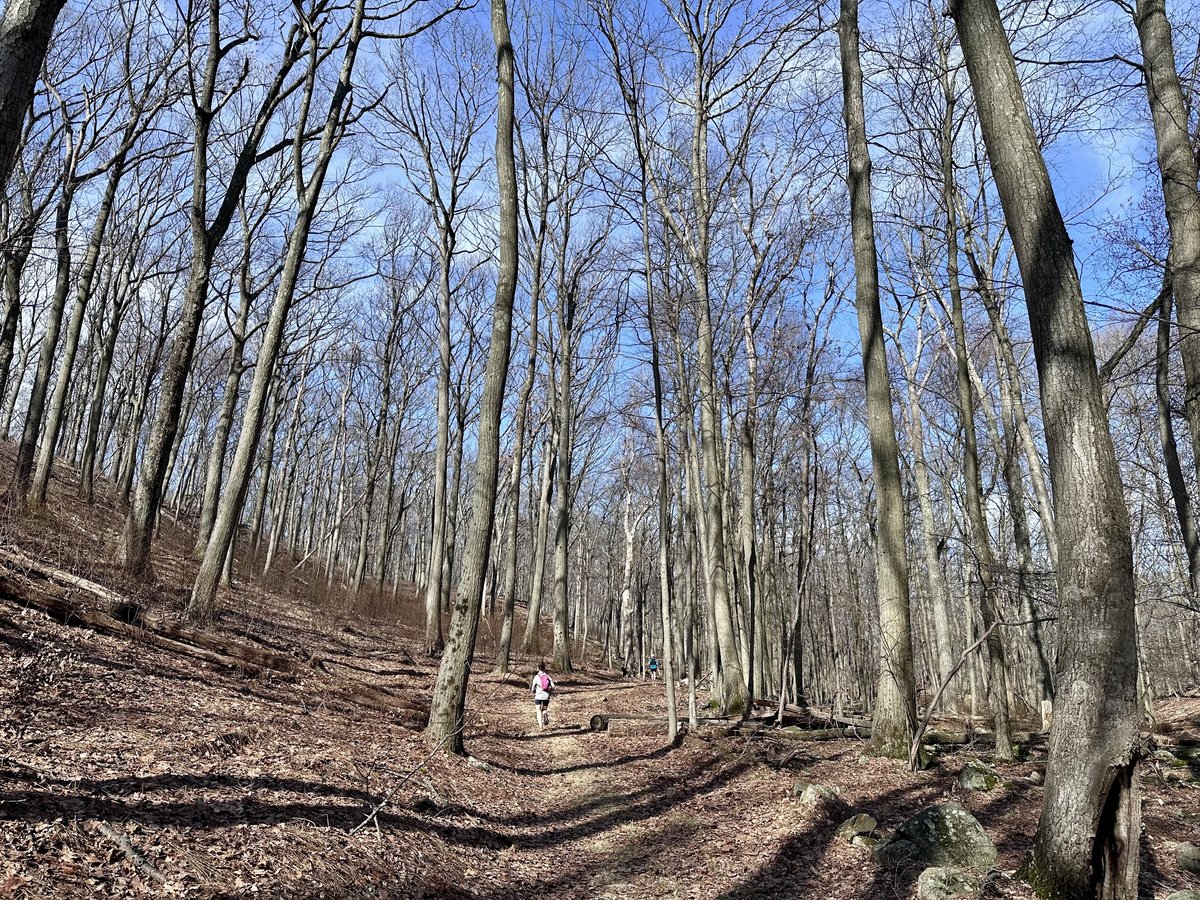
From Queensboro the course loops back toward the start, mostly flat or descending with a few small rollers. This is where the wrong turn happened. A small group of us, spread out enough that no one was following anyone in particular, missed an arrow and went off course. I had a sense after a few hundred meters that something was off. Most of us turned around quickly, but a couple of runners were too far ahead to hear us calling and kept going. Not sure if the signage had been moved or if it was just easy to miss. Either way, it cost less than a quarter mile.
Cat's Elbow and the ridge
After coming back through the start/finish area at mile 7.5, the course turns sharp left and heads up toward Cat's Elbow. This is where the race changes character. The second half is where all the climbing lives.
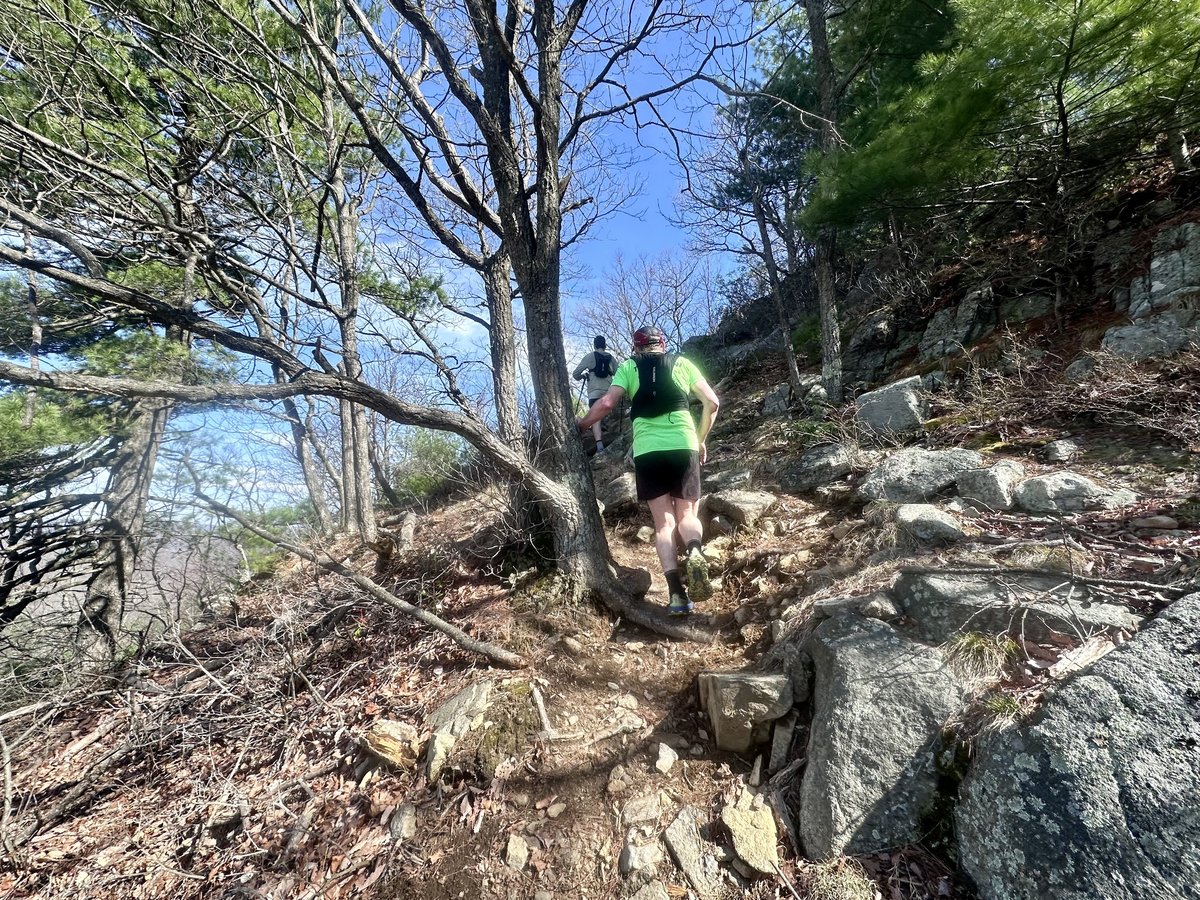
Cat's Elbow is a short, but legit scramble. You're probably not running it. The segment called Cat's Forearm to the Pass came in at 13:51, a new PR on that stretch. The climb up to West Mountain via the AT was my third-best all-time effort on that segment. The legs were still working. The problem was I'd spent more of them than I meant to in the first half.
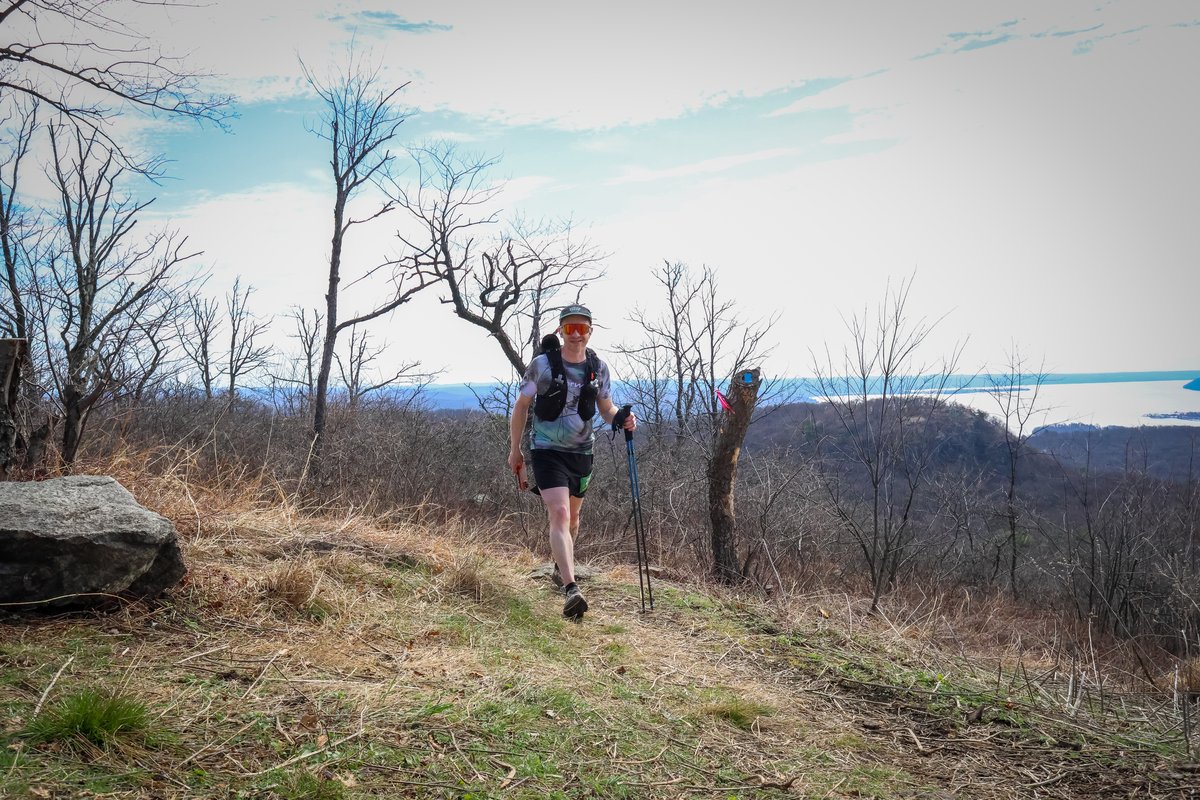
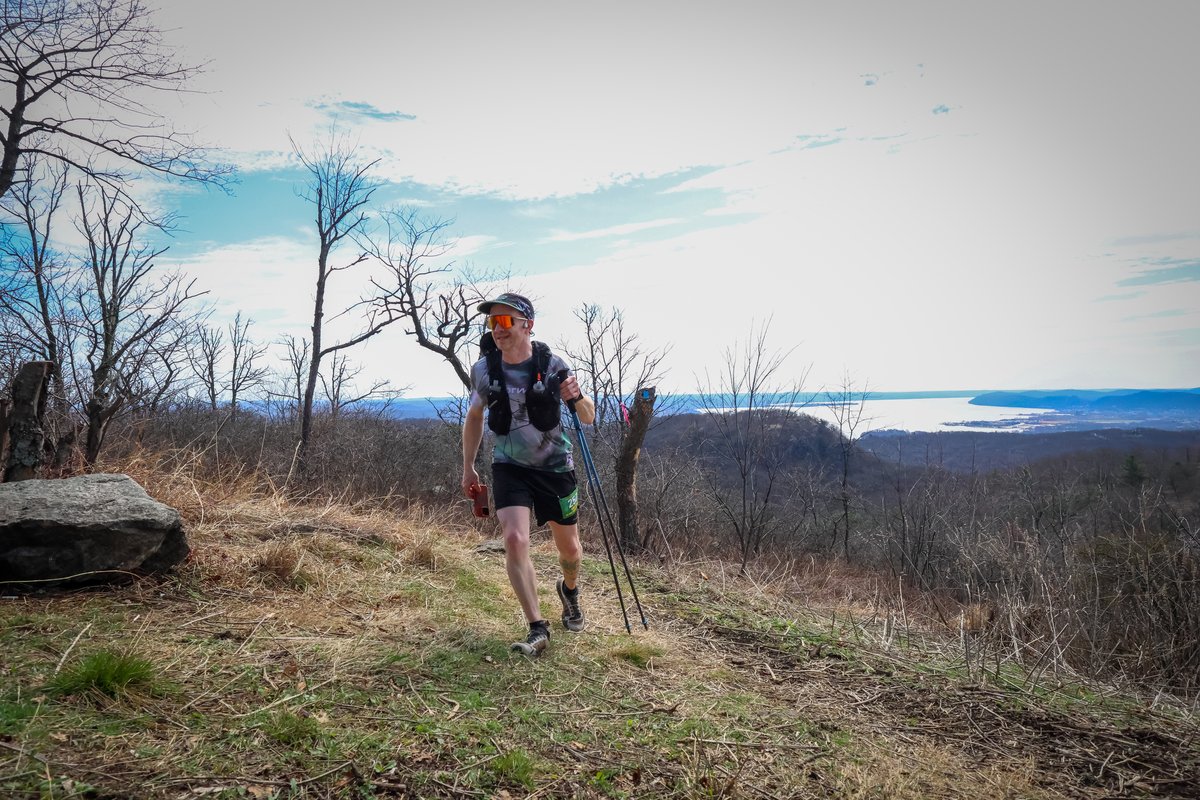
A few decent views from the ridge are the payoff for the climbing. From the exposed sections above Cat's Elbow you get Hudson River to the east and open sky in every direction. Miles 10 and 11 were my slowest of the day - 18:45 and 20:01, respectively, as the trail pitched up through 461 feet of gain.
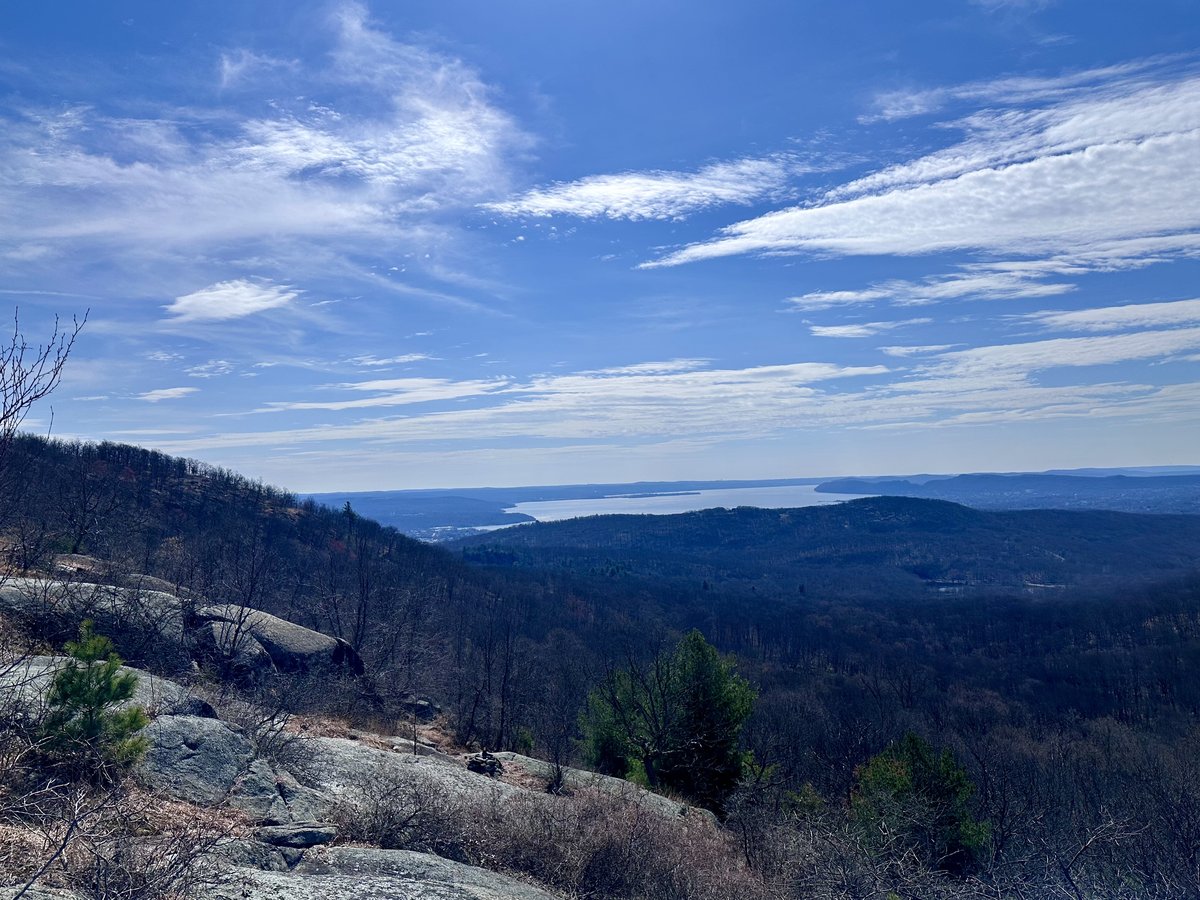
West Mountain Shelter and the descent
The West Mountain Shelter sits at the high point of the course, around mile 11. Water only here, not a full aid stop, but it's a classic AT shelter perched on open rock with a long view west. For me, the shelter is one of the more iconic spot in the Bear Mountain area and reminds me of my early days exploring (hiking and running) in the area.
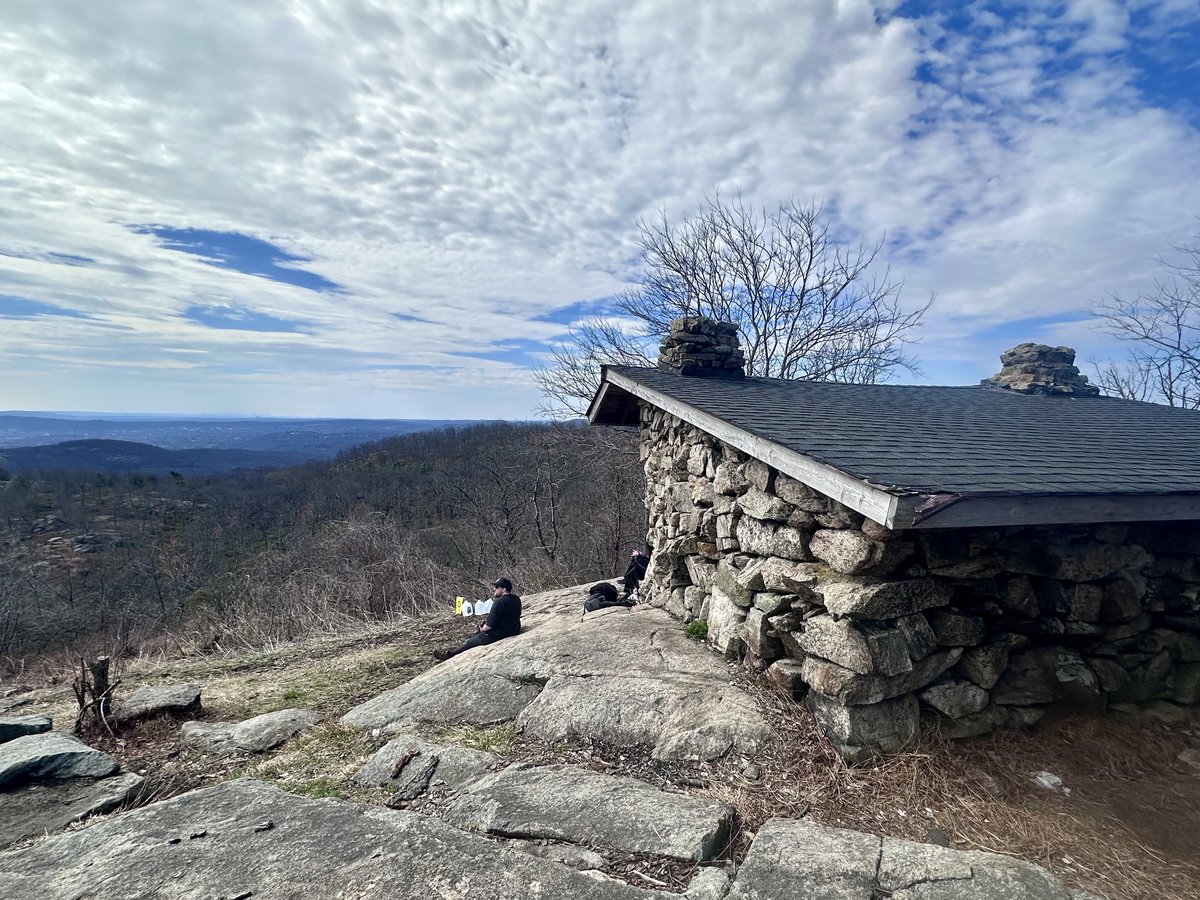
From the shelter it's small rocky ups and downs before the final descent off West Mountain. That descent is usually where I have the most fun on this course - it's flowy and fast, the kind of trail where you're picking lines through the exposed rock the way you'd pick lines through trees on skis. This time I was tired and couldn't open it up the way I usually do. I dialed it back and ran it safely. The Strava segment for the AT descent still came in as my third-best all-time.
Overall
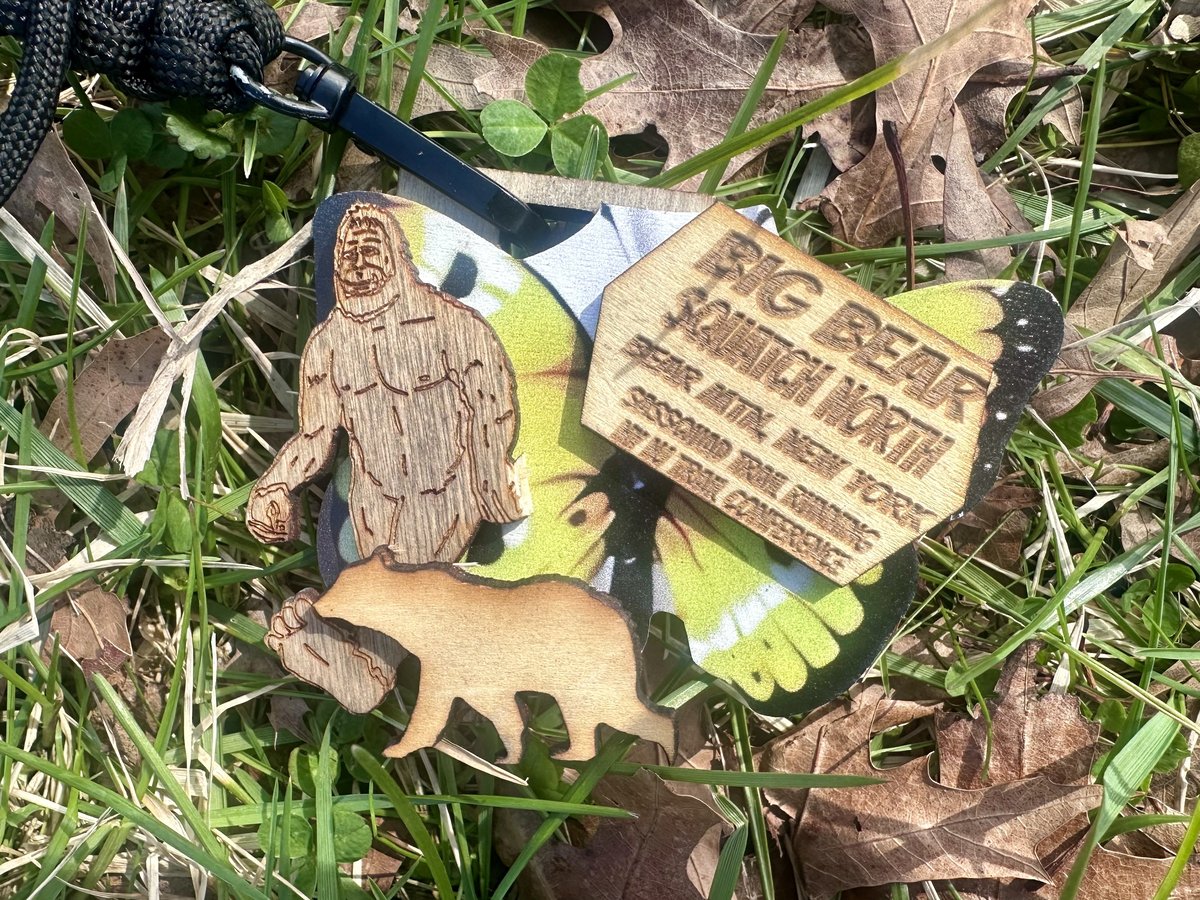
The Big Bear Squatch North is a well-run, well-marked race on genuinely good terrain. Sassquad consistently delivers a low-stress atmosphere - this is not a race that takes itself too seriously, which makes it easy to show up and actually enjoy the day. The finisher medals are handmade wood pieces, which is a nice touch.
My one reservation about the 2026 edition was the mass start for both the half and the 10K. The trails here are wide enough but still can't handle the volume of people starting at the same time. It bunches up and feels unnecessary. Starting toward the front solved the problem for me, but it's worth knowing going in.
As for my day: I went out in the low 9s, which was probably 30 seconds per mile faster than I should have been running a week after a hard effort. The back half of this course is not the place to be carrying a deficit. The descent that's usually a reward felt like a chore. I finished, ran some solid segment times on the climbs, and enjoyed the ridge. I'll be back next year.
By the Numbers
- Distance: 13.51 mi
- Elevation gain: 2510 ft
- Elapsed time: 2:40:17
- Avg pace: 11:51 /mi
- Avg HR: 164 bpm (max: 180 bpm)
Gear rundown
- Mount To Coast T1 - Still breaking in, but holding up well across mixed terrain.
- Nnormal Race Shorts - Lightweight and well-ventilated for a warm April morning.
- Nnormal Race Shirt - Super lightweight construction and a sun-deflecting print.
- Salomon Adv Skin 12 - Carried hydration and nutrition cleanly for the full 13-plus miles without any bounce or fit issues.
- Salomon Custom Quiver - Pole attachment for the vest, kept the Carbon Zs accessible on the climbs.
- Black Diamond Carbon Z Poles - Carried the full course; didn't end up using them.
- Maurten Gel 100 - Two gels across the race. Still my reliable go-to, experimenting with Precision Fuel as an alternative.
Tips
- The half marathon and 10K run as a mass start. If you're running the half, get toward the front before the gun to avoid the traffic jam on the early singletrack.
- The race typically sells out before March; register early.
- The course is a double-lollipop: you return to the start/finish at the midpoint before heading back out so minimal need to carry much nutrition.
- Trekking poles are strongly recommended for the Cat's Elbow scramble and the West Mountain climb but you really don't need them.
More info & links
- Sassquad Trail Running — Big Bear Squatch North - Official race page with course info, gear requirements, and the Sassquad Trail School course marking videos.
- UltraSignup — Registration - Registration typically opens in winter and sells out by March.
- UltraSignup — Results - Full results for the 2026 edition.